Good Day
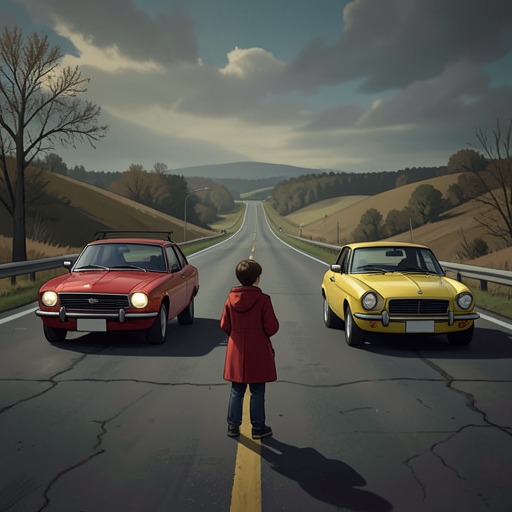
The Curious Incident of the Dog in the Night-TimeGood Day is a category in Christopher’s personal system for classifying days by the colors and sequence of passing cars. Its importance is practical as well as emotional: after four red cars pass in a row on his bus ride to school, Christopher decides not to be sad about Wellington and takes the day as a suitable time to begin a project—finding out who killed the dog.
Rules and Meaning
The system assigns different values to particular sequences. Four red cars in a row make a Good Day; three make a Quite Good Day; five make a Super Good Day. Four yellow cars in a row make a Black Day, when Christopher does not speak to anyone, sits alone reading, skips lunch, and takes no risks. The categories turn an observation of traffic into a clear structure for approaching the day.
Christopher explains that the system is not logical in the same way that numbers or arguments can be logical. He likes things to be in a pleasing order, but order can take forms other than formal logic. He compares his car rules with ordinary reactions to weather: people may feel happy when the sun shines or sad when it rains, even when the weather has no bearing on their work. In his account, the car-count rules are another way of organizing experience.
How the System Is Used
The categories guide Christopher’s behavior, rather than merely naming his mood after the fact. A Black Day brings a defined set of withdrawals and precautions; a Good Day, by contrast, makes room for planning and action. The system gives him a dependable rule for deciding what kinds of things to undertake.
On the morning in question, the bus passes four red cars in a row. Christopher recognizes the sequence as a Good Day and decides not to grieve over Wellington. The classification does not erase the loss; it changes what he chooses to do with the day. He resolves to investigate who killed Wellington because, as he explains, a Good Day is a day for projects and planning.
From Good Day to Investigation
Christopher tells Siobhan that he intends to find out who killed Wellington. Since the class is supposed to be writing stories, she suggests that he write about finding Wellington and going to the police station. Christopher identifies this exchange as the point at which he starts writing the book. The Good Day rule therefore sets a chain of events in motion: a favorable car sequence supports a decision to investigate, and that decision becomes the beginning of his written account.
The system’s significance lies in this conversion of a small, countable pattern into a plan. Four red cars do not reveal who killed Wellington; they provide Christopher with an orderly basis for proceeding despite his sadness. The category joins the book’s attention to rules and patterns with its central movement from observation toward investigation.